| |
Stages abroad
DATE
TITLE1
Title2
|
Text
|
|
Text


|
|
20.03 – 20.04.2025
Stockholm University, Department of Chemistry, Swedeen
Participants: Dr Tudor Vasiliu and PhD Razvan Puf
|
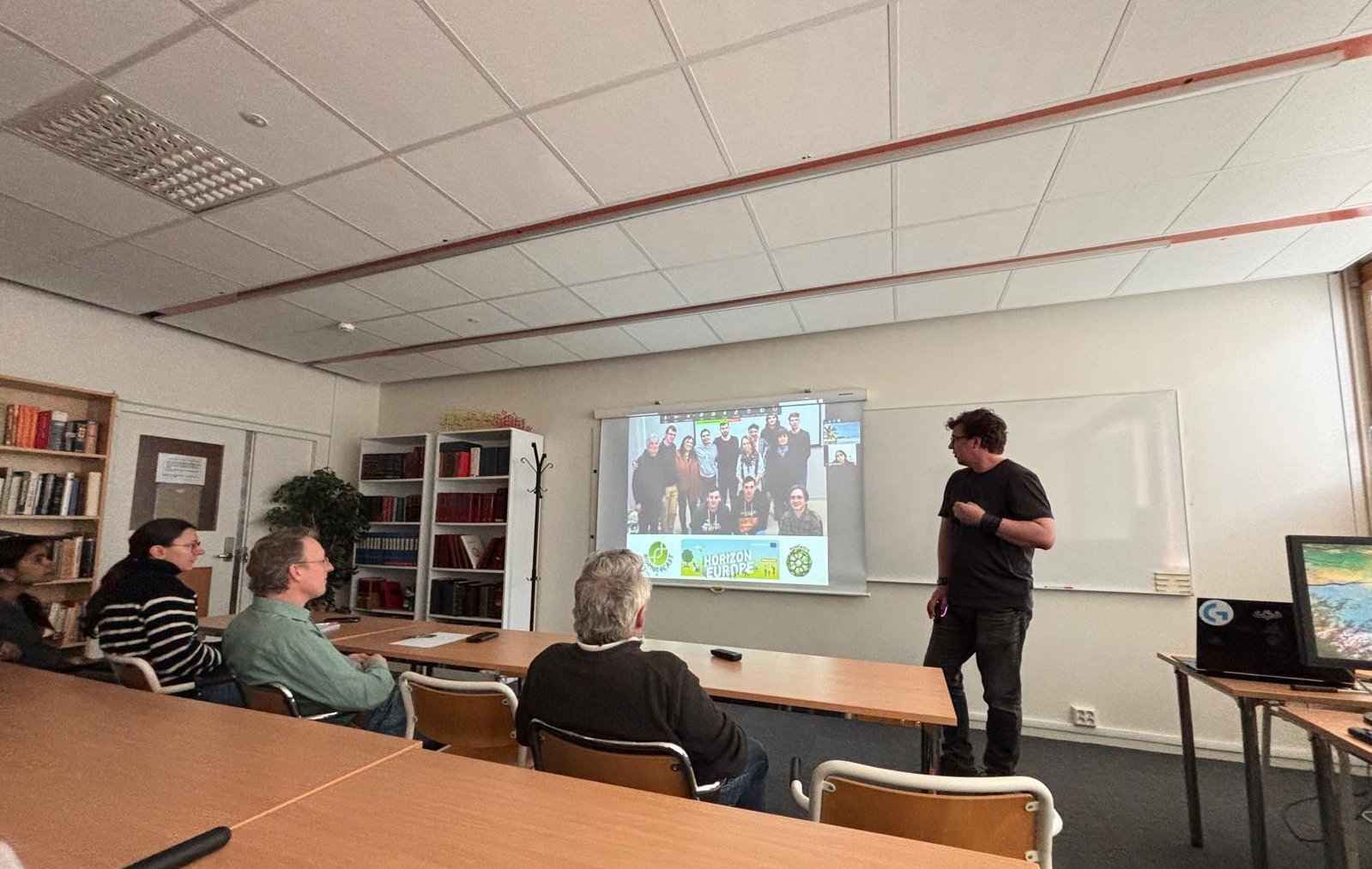
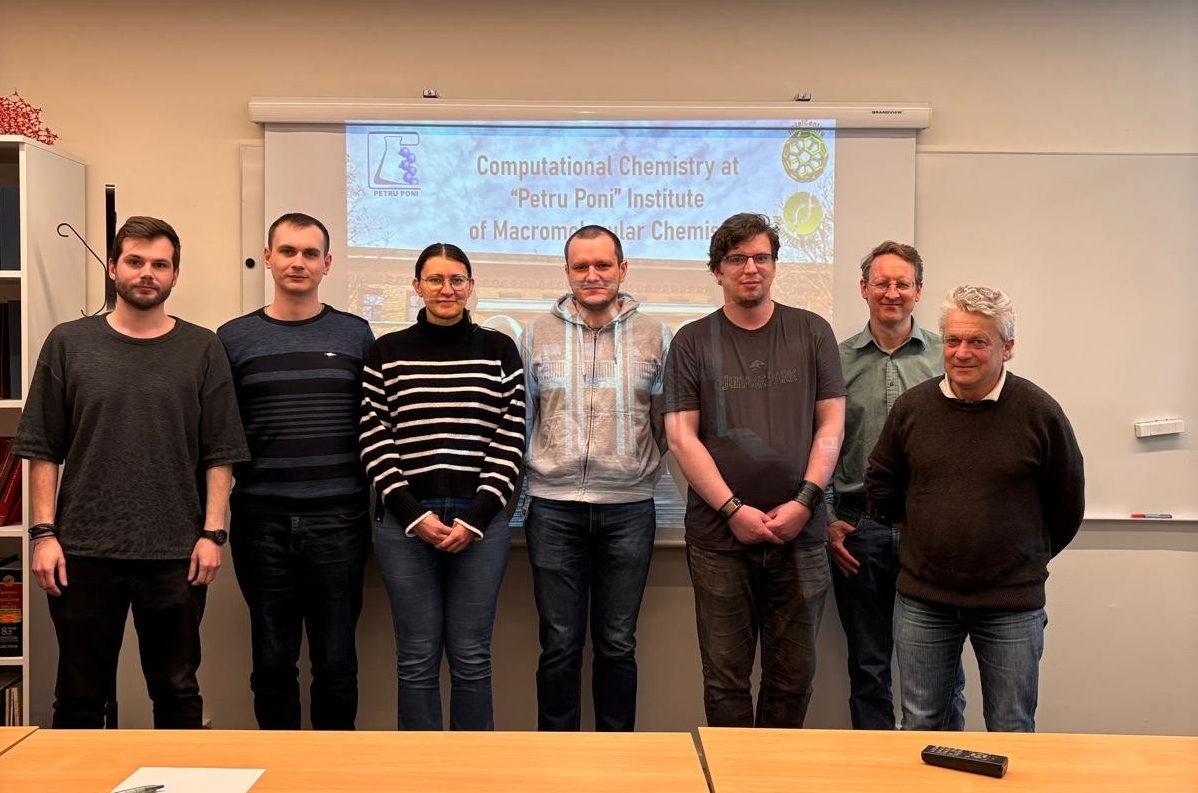
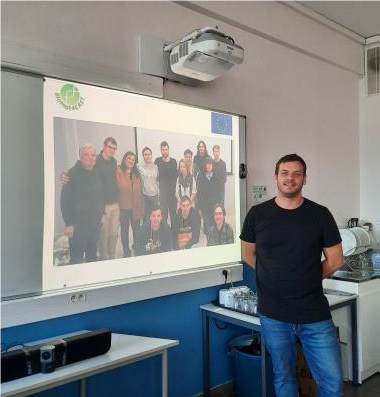
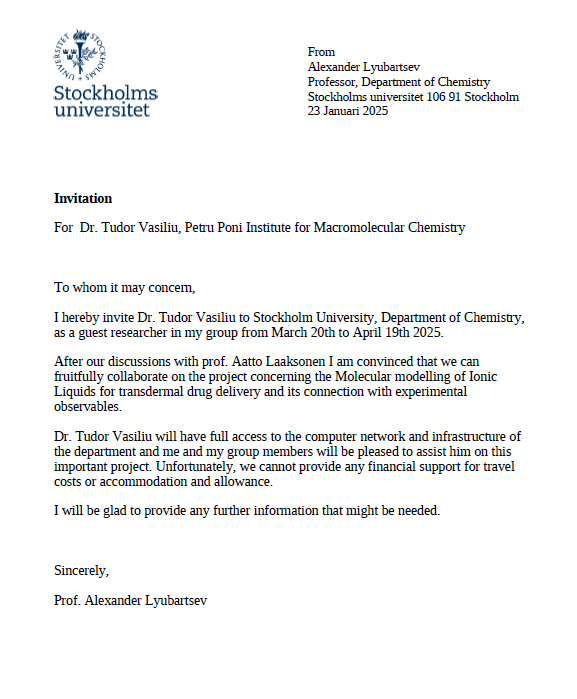
Between March 20 and April 19, 2025, Dr. Tudor Vasiliu and PhD student Razvan Puf conducted a one-month scientific stage at Stockholm University in the group of Professor Alexander Lyubartsev. The main objective of this stay was to learn and apply the MagiC software package for bottom-up coarse-graining of molecular systems and to use it in the development of a coarse-grained (CG) model of a 12 nucleosome core particle array.
|
|
|
|
|
During the stage, practical training was acquired in the use of MagiC for inverse Monte Carlo (IMC) and iterative Boltzmann inversion (IBI) methods to derive effective interaction potentials from atomistic simulations. This methodology was applied to a biologically relevant system, an array of 12 nucleosome core particles (NCPs), with subsequent simulations performed at varying salt concentrations in order to investigate chromatin structural transitions. The workflow involved studying the MagiC tutorials, installing the package in a Linux environment, and constructing a CG mapping of nucleosome core particles, with DNA and histone components represented as bead-based models. Radial distribution functions were computed from atomistic trajectories, and effective potentials for bonded and non-bonded interactions were derived. Mesoscale simulations were then carried out at different salt concentrations (0.15 mM, 0.25 mM, and 0.40 mM NaCl), with electrostatics treated using Ewald summation and production runs executed in GROMACS.
|
|
|
The results revealed a salt-dependent chromatin fiber organization: at low salt concentration (0.15 mM NaCl) the array remained extended, at intermediate concentration (0.25 mM NaCl) partial compaction with nucleosome stacking occurred, and at higher concentration (0.40 mM NaCl) a more compact zig-zag arrangement was observed. These findings qualitatively reproduced the expected folding behavior of chromatin and confirmed the validity of the developed CG model. In addition to the scientific work, the stage also included exposure to the vibrant academic environment of Stockholm University, with visits to the Arrhenius Laboratory, the AlbaNova University Center, and the University Library. These experiences offered valuable insight into the strong research culture and infrastructure of the institution.
Overall, the stage provided advanced training in coarse-grained modeling and multiscale molecular simulations, contributing to both the development of new technical skills and a deeper understanding of chromatin biophysics.
|
|
|
03-07.02.2025
Mobility Recent Advances in Computational Biophysics: Methods and Applications; Forschungszentrum Jülich, Germany
Participants from the BioMat4CAST Team: PhD Students: Razvan Puf, Narcis Cibotariu, Petru Tirnovan
|
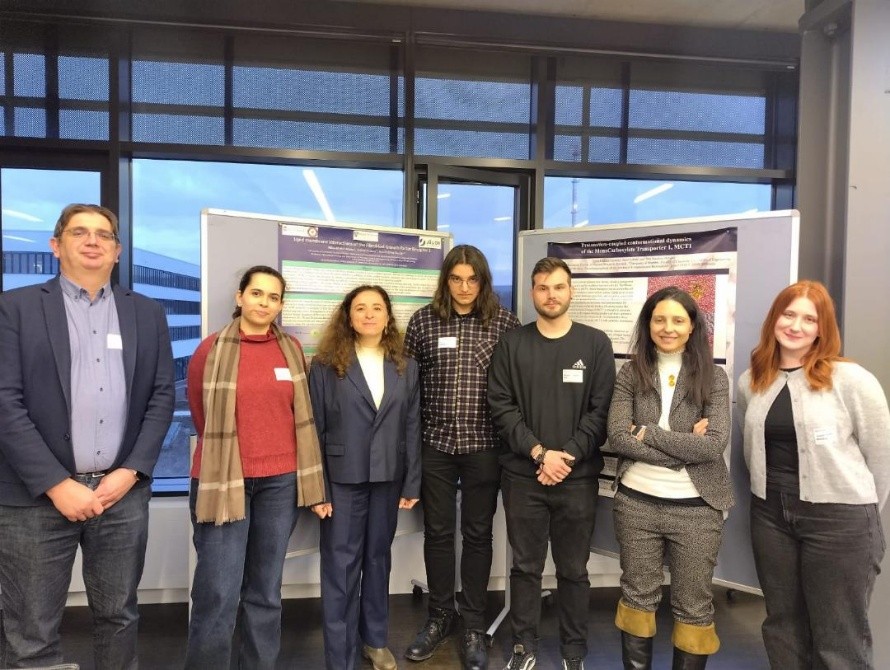
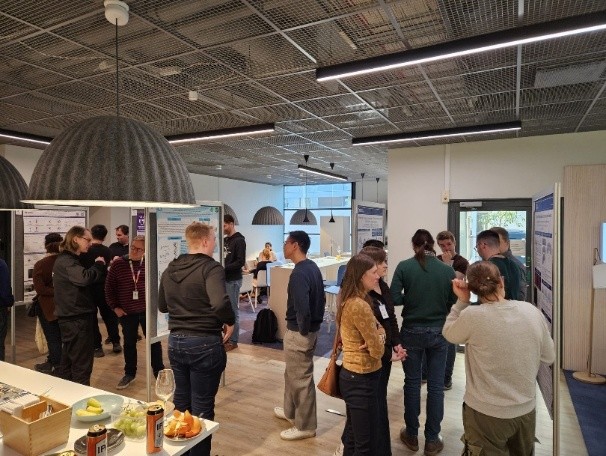
Recent Advances in Computational Biophysics: Methods and Applications was hosted by Forschungzentrum Jülich on February 3–7 and comprised two parts, the first three days focusing on computational approaches for molecular dynamics, rare event modeling and biomolecular simulations, machine learning (ML) applications in biomolecular simulations and computer-aided drug design, and the last two days were devoted to structural predictions of membrane proteins with a focus on ion channels and G-protein coupled receptors (GPCRs).
Of the many presentations, a few particularly stood out thanks to the caliber of the speakers and the significance of their research. Prof. Michele Parrinello, a heavy name present at the conference and a pioneer in molecular dynamics, gave a two-part presentation on the challenges in studying long time dynamics and rare events. He presented a novel probability-driven enhanced sampling method that integrates the Kolmogorov bias, which stabilizes the transition state ensemble, with On-the-Fly Probability Enhanced Sampling (OPES), a powerful metadynamics-inspired technique, allowing an efficient exploration of transition states and free energy landscapes. Prof. Mark Tuckerman's lectures on the synergy between enhanced sampling techniques and ML as well as new approaches in constant pH simulations were equally engaging and illustrated the power of AI in refining biomolecular force fields and identifying reaction coordinates. Prof. Modesto Orozco from the University of Barcelona also gave two lectures. One of these was dedicated to one of the most challenging topics in molecular modeling: multiscale DNA simulations, where he compared the widely used force fields for DNA, addressing their advantages and limitations. In addition to other interesting presentations on GPCRs, Prof. Ana-Nicoleta Bondar, in her lecture on hydrogen bonding networks in membrane proteins, demonstrated how graph-theory approaches can elucidate the conserved interaction patterns that are essential for proton-coupled mechanisms.
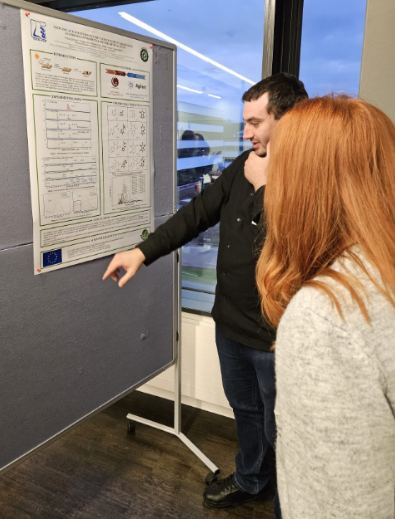
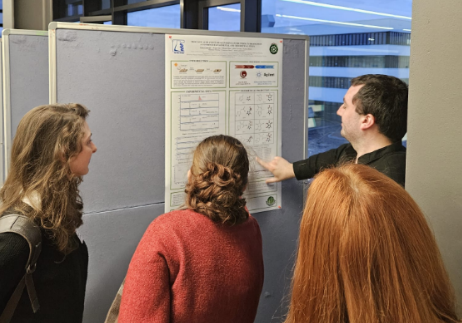
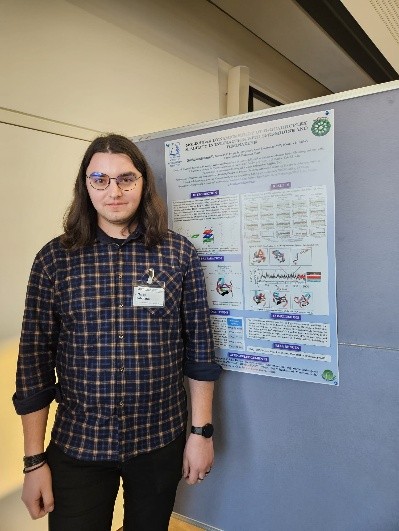
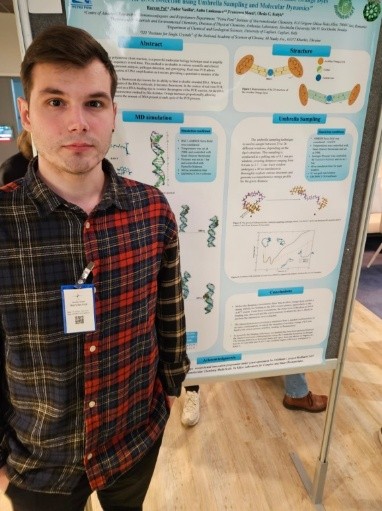
It is worth mentioning that the conference also included poster sessions which were displayed throughout the event and represented the research of PhD students. My poster, Molecular dynamics study of G-quadruplex stability in interaction with spermidine and diminazene, gave me the opportunity to present my work, receive feedback and exchange ideas with fellow researchers.
|
|
|
20.05 – 08.08.2024
PhD student Narcis Cibotariu stage in Cagliari University, Italia
|
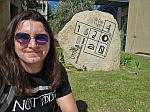
From 20th May to 8th August 2024, PhD student Narcis Cibotariu did a research internship at the University of Cagliari, Department of Chemical and Geological Sciences, under the supervision of Prof. Francesca Mocci. The main objective of this internship was to become familiar with the AMBER software package and the methodology of molecular simulations applied to ionic liquids. To achieve this objective, he worked with ionic liquids, using systems whose properties are already well documented, a setting that facilitated learning the essential steps of working with AMBER: constructing molecular structures, assigning parameters, and running molecular simulations.
|
|
|
The choice of well-characterized systems was intended to support the learning process and enable an understanding of how to use the program and the types of analyses that can be performed. As a result, this activity contributed significantly to enhancing his practical skills in the field of molecular modeling. Access to the department's computing infrastructure and the University network, together with the constant support provided by Prof. Francesca Mocci and the members of her research group, facilitated his training and integration into a dynamic scientific environment. During his internship, he acquired complementary skills, such as critical reading of scientific literature, writing a review article, and managing references using Zotero.
By familiarizing himself with the field of deep eutectic solvents, he drafted a significant part of a review that was published few months later. The internship also had a cultural and language component, through which he acquired some knowledge of Italian through daily interactions. This experience helped him fit into a multicultural environment, making him more adaptable and open to international collaborations. The internship was a valuable learning experience that strengthened his scientific skills, added a new dimension to his knowledge, and improved his ability to communicate and collaborate in the field of academic research.
|
17-19.04.2024
Finland: CSC Spring School on Computational Chemistry 2024, Espoo
Participants: PhD student Razvan Puf, PhD student Narcis Cibotariu
|
Spring School on Molecular Modelling and Computational Chemistry
This Spring School offers an intensive, hands-on introduction to key methods in molecular modelling and computational chemistry, targeting graduate students, early-career researchers, and industry professionals. The program includes foundational sessions on classical molecular dynamics and electronic structure theory, along with modules on machine learning in chemistry and enhanced sampling methods. Emphasis is placed on both theory and practical exercises using modern supercomputing tools. Participants will gain a comprehensive overview of computational techniques and HPC software, useful across disciplines such as physics, materials science, and biosciences. The school also fosters networking and collaboration, encouraging participants to bring posters and engage in community-building activities. Basic knowledge of Linux and Python is recommended for full participation.
|
|
The first day was devoted to a comprehensive presentation on molecular dynamics (MD) simulations in biosystems held by Dr. Hector Martinez-Seara from the Institute of Organic Chemistry and Biochemistry of the Czech Academy of Sciences. He masterfully exposed fundamental concepts of MD, including force fields, macroscopic properties, statistical ensembles, various simulation softwares up to complex analysis of simulation trajectories. The practical exercises which followed were focused on different working protocols, consolidating the already acquired knowledge and introducing many new valuable insights which will significantly improve the quality of my work.
The second day featured a thorough lecture given by Prof Antti Karttunen from Aalto University on the types of systems and properties that can be studied by quantum chemical methods, along with the software available for quantum modelling of molecules and materials. In the hands-on session, we had the opportunity to explore in-depth these software tools.
Day three was also the final day of the training, and it proved to be the most intensive and diverse. Making use of the information from the previous days, Dr. Matti Javanainen from the University of Helsinki gave a presentation on enhanced sampling methods, and in the hands-on session that followed we could see examples such as setting up alchemical simulations with GROMACS, AWH principles and interpreting its results. Given the heterogeneous background of the participants, some topics proved more accessible to some, but new for others, which was partly mitigated by organizing the practical sessions in three parallel tracks each having a different level of difficulty. Dr. Shreyas Kaptan from the University of Helsinki and Prof. Milica Todorović from the University of Turku brought the day's presentations based on data-driven science, also known as machine learning (ML), into the mix. This approach was well received by the participants, especially as the lectures and practical exercises given were tailored for computational chemistry and covered several approaches to model data. Besides outlining the main fundamental methods and molecular modelling tools, another declared objective of the school was to serve as a meeting place for networking and community building, therefore enough time was reserved for discussion and interaction such as the poster session at the end of the first day or the sauna session at the end of the second day to communicate our work and interests.
All things considered, the CSC Spring School provided a great chance for professional and personal growth for all those participated, encouraging increased comprehension, idea sharing, and the formation of important contacts in the scientific community.
|
01.09.2023 - 02.10.2023
Stage abroad to the "Institute de Chimie Radicalaire Aix-Marseille University"
-- Dr. Isac Dragoș - Lucian --
Group of Professor Mario Barbatti Marseille, France, 01.09.2023 - 02.10.2023
|
Dr. Dragoș - Lucian Isac, carry out an internship in the field of computational chemistry. In this internship he improved his knowledge on the calculation of excited states of organic compounds by applying adiabatic and non-adiabatic methods. Also, during the internship he employed different programs to calculate the excited states, such as NEWTON X, MOPAC-PISA. Within the Prof Mario Barbatti group, he participated in seminars on the application of the "machine learning" algorithm for the calculation and interpretation of data following electronic excitation processes. The stage allowed for networking activities development and collaborations with Prof. Mario Barbarbatti from "Institute de Chimie Radicalaire Aix-Marseille University".
|
|
|
|